Light pollution at sports clubs - challenge and solution for Belgian clubs

Belgian sports clubs face a new challenge: light pollution (also known as light pollution called) by their grounds lighting. In the Netherlands, this topic is already very current - sports fields in the middle of residential neighborhoods have to be strictly guarded against light shining outside the grounds . In Belgium, the attention has so far been less, but that will soon change. So club administrators would do well to act now. In this article, we discuss what light pollution means, how our neighbors to the north deal with it and, above all, what solutions EcoSports can offer to illuminate your sports field without disturb the neighborhood.

What is light pollution and why is it a problem?

By light pollution or light nuisance we mean the nuisance caused by artificial light outside the intended target area . Specifically: bright light from sports field floodlights shining into the windows of surrounding houses in the evening hours, for example, or affecting the darkness of the night. Local residents experience this as disturbing - glare, a brightly lit bedroom or a sky where no star can be seen. It's not just an aesthetic problem; excessive nighttime light has demonstrable consequences. Thus, it can disrupt our melatonin production and sleep rhythm , and nature also suffers: animals become disoriented or exhibit unnatural behavior because of all that light . Moreover, unfocused light is simply a waste of energy and increases CO₂ emissions unnecessarily .


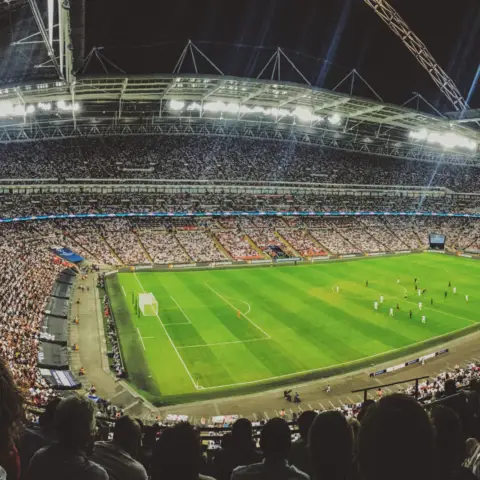
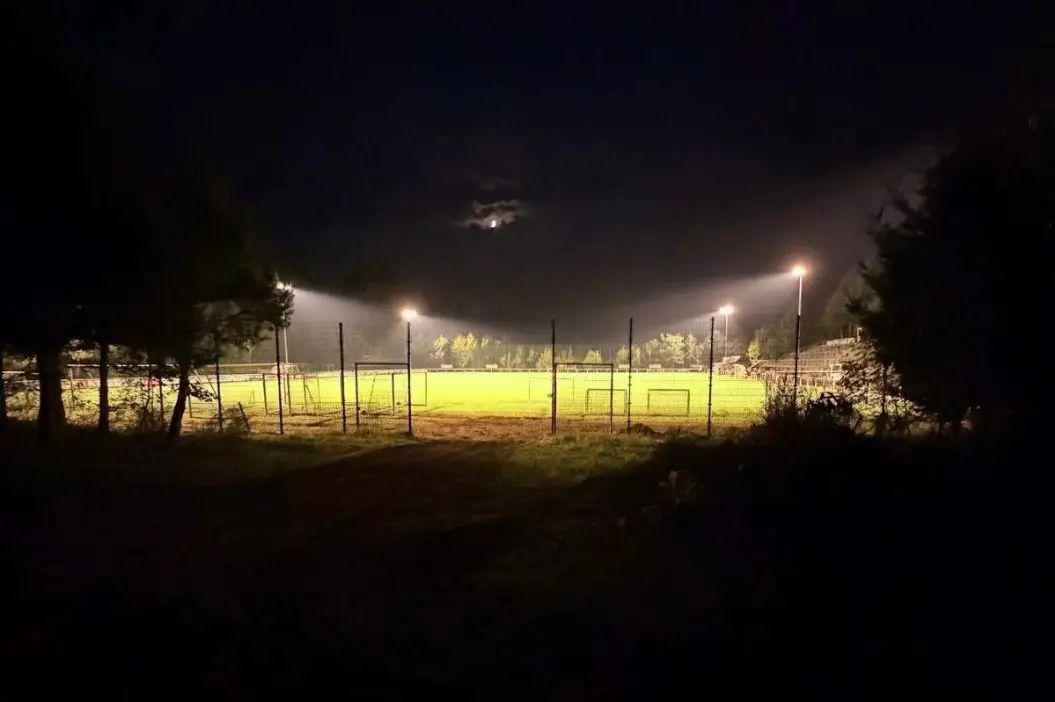
Sports parks in densely populated neighborhoods in particular regularly receive complaints about light pollution. The image is recognizable: around an illuminated soccer field you can see the glow of the floodlights in the wide surroundings. This “stray light” is annoying to the neighborhood and detracts from nighttime darkness. No club likes disgruntled neighbors - and if there are official complaints, authorities can intervene with restrictions or even fines . High time, then, to put the light to shine only where it belongs: on the field.

Light nuisance: how the Netherlands is tackling it

Light pollution around sports fields is high on the agenda in the Netherlands. While there is no separate “light pollution law,” via environmental regulations (the Activities Decree) there is a duty of care to prevent annoying lighting phenomena for local residents . Specifically, that decree requires that sports field lighting disabled must be on between 11:00 p.m. and 7:00 a.m. and always off when there is no sport . After all, no one wants to have an empty field shining in the middle of the night. There is an exception for special occasions (the “12-day rule” for tournaments etc.) , but the club must then apply to the municipality.


In addition, guidelines from the NSVV (Dutch Foundation for Lighting Science). to determine how much off-site light is acceptable . Those guidelines distinguish between environmental zones. In residential areas (zone E3, for example), a maximum of 2 lux of light may fall on the facades of houses at night - for comparison, 1-2 lux is about the light of a full moon. In more rural areas (E2), that limit is even lower (±1 lux) . The glare intensity of lamps for local residents is also limited, expressed in candela per fixture . In short, in the Netherlands, clubs must take strict criteria into account already when designing their field lighting in order to keep the surroundings dark.


These rules are having an effect: for new lighting installations, a standard light nuisance calculation made . Municipalities may even require this before granting a permit . After installation, measurements are often taken to check how many lux the surrounding facades receive. If this turns out to be higher than permitted, the club must make adjustments - for example, by adjusting or shielding lamps. Dutch clubs are therefore well aware that good lighting is not just about lux levels on the pitch, but also about what is allowed on the pitch. next to the field happens.

Situation in Belgium: take action now

In Belgium, such specific legislation around sports lighting is still in its infancy. Nevertheless, general environmental rules also apply here. For example, VLAREM (Flemish environmental regulations) stipulates that sports field lighting must be extinguished at least between 11 p.m. and 7 a.m. and remain off when there is no sporting activity - that sounds familiar. In addition, the Flemish government has guidelines to reduce light pollution that are very similar to the Dutch approach. The key message: light only where, when and as much as needed . Some recommendations are to choose fixtures that properly shield the lamp, avoid direct view of the light source, and never shine above the horizon . In other words, aim lamps downward at the target surface and avoid useless light shooting off to the side or upward.


Although explicit Belgian standards (such as lux limits on facades) are less elaborate than in the Netherlands, we find that local governments and local residents are becoming increasingly alert. Certainly in Flanders, “light pollution” is a subject that receives attention in environmental and biodiversity policy. Studies are being conducted into night-time lighting and its impact, and tools such as darkness maps are being developed. For new sports facilities, some municipalities are already asking for a lighting study or plan in advance, including an analysis of possible light nuisance. Belgian clubs had better be prepared: it is not inconceivable that similar stricter rules will come into force here in the near future. Who invests now in sustainable, directional lighting ensures a future-proof solution and avoids costly modifications or conflicts later.

How do you limit light pollution? Practical solutions

So how can a sports club ensure that its field lighting keeps its neighbors happy? Some practical tips in a row:


  • Use lighting only when necessary: This seems obvious, but it remains the first step. Turn off installations in a timely manner - especially after 11 p.m. at night, the standard states that no field lights should be left on . Even during breaks or when a field is not in use, extinguish the lights. This also saves energy and costs.

  • Choose the right masts and adjustment: The design of the installation determines how much light leaks out. A rule of thumb: the greater the inclination angle of the light beam, the more chance of stray light . For example, on a large soccer field with tall masts, you need ~70° beam angle to reach the center . But beware - that same 70° on a smaller field (e.g. a tennis court) would shine straight into the neighbors' bedrooms . Here, the solution is often to use lower angles or additional masts so that each lamp needs to be tilted less. The lighting plan must therefore be tailored to the field and the surroundings: better to have several well-directed lights than a few that shine at too great an angle.

  • Avoid direct view of the light source: Much light pollution is caused by nearby residents looking directly into the bright LED lights. Modern luminaires respond to this. Choose lamps with shielding or special optics that direct the light downward and cover the source . For example, there are hoods or so-called “light guides” that can be clicked onto a fixture to delineate the beam of light . Such accessories block the light that would shine beside or behind the field so that there is no annoying radiation to neighbors is . Simple details also help: avoid fixtures that shine above the horizontal and preferably mount lamps so that their front faces are flush rather than visible from the side.

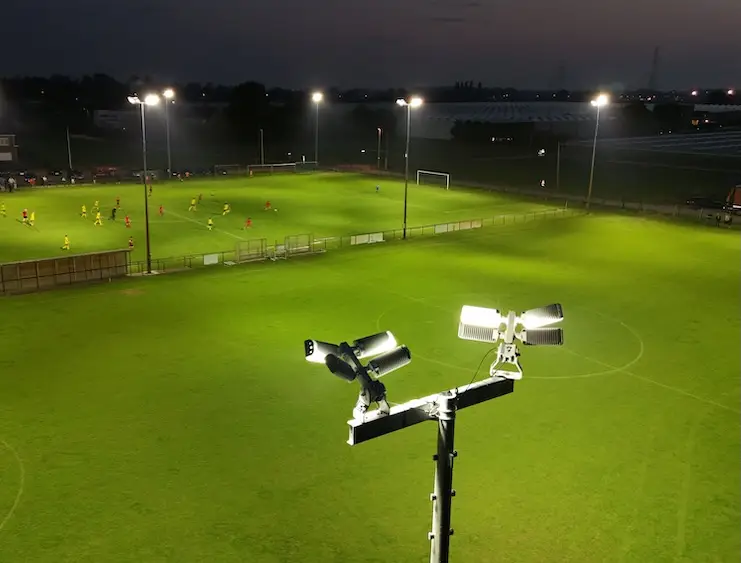
  • Go for asymmetrical LED lighting: The newest and most effective solution is the use of asymmetric luminaires. Whereas traditional floodlights (formerly halogen, now often LED) with symmetrical lenses emit a broad cone of light, asymmetrical lamps have a lens design that allows the light to be especially forward and down projects exactly across the field. As a result, hardly any light gets outside the field boundaries . In addition, the glare level for bystanders greatly reduced because the bright LEDs themselves are not visible off the playing field . Some new sports lights even go a step further and use reflector technology instead of lenses, so that 100% of the light falls on the field and the surroundings are guaranteed to remain dark . The result is impressive: around the field the nighttime darkness remains intact, while on the grass or track the required lux values are effortlessly achieved .

EcoSports’ solution: from Eagle to Leopard fixtures

At EcoSports we already have experience in balancing field lighting and environmental friendliness. Until now, many Belgian clubs have used our Eagle-LED luminaires - a proven system where multiple modules (e.g., 6, 8 or 10 per mast) are individually directional for excellent light uniformity in the field. This modular approach ensures that every corner of the field is well lit . Yet we noticed that even high-quality LED lamps with precise adjustment could in some cases still give a little stray light outside the field. Especially in residential areas you want to avoid that.


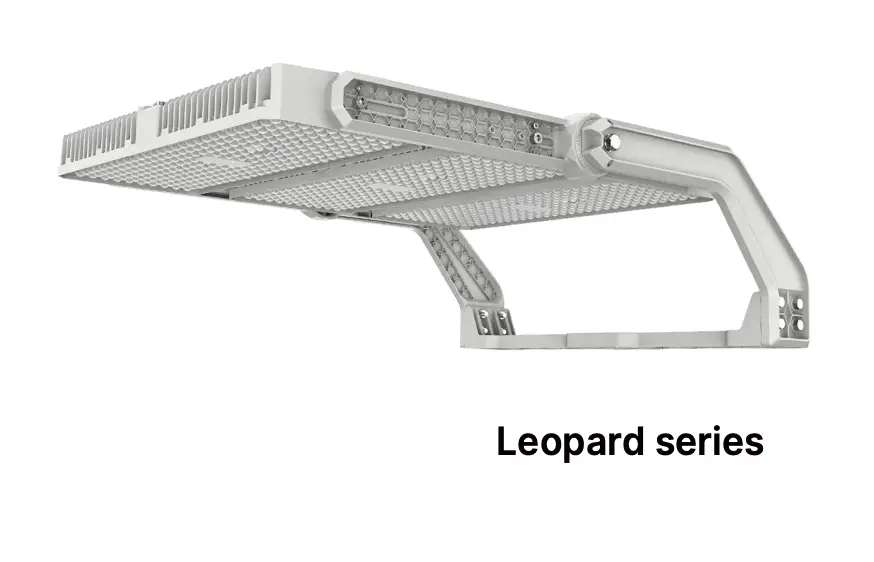
Therefore, we now introduce the Leopard-fixture, an asymmetric LED system specifically designed to combat light pollution. These lights have special lenses that sharply cut off the light beam at the site boundary - light that would normally escape to the side or upward is minimized. Outside the playing field, therefore, it is virtually dark, while the players themselves have perfect visibility. Moreover, the glare for spectators and local residents is minimal because the bright point light of the LEDs is not visible from the surroundings . Although the Leopard luminaires are slightly more expensive per unit than a standard module, they deliver enormous added value: you no longer need to mount additional caps or screens to meet light obstruction standards - the design itself does the work. All light is used efficiently on the field, which also means that less power needed for the same result . In other words, if you invest in asymmetrical lighting, you also save energy in the long run by not losing light.


This makes our Leopard series ideally suited for clubs that want to proactively take the step to sustainable and neighborhood-friendly sports lighting. Think of tennis clubs with courts right next to gardens, soccer fields in village centers, field hockey or rugby pitches close to homes - in all these situations, asymmetric LED lighting offers a future-proof solution. It is also applicable to athletics tracks or other outdoor sports infrastructure where lighting is needed at night.
Conclusion: prepared for the future

Light pollution around sports fields is a topic that is only becoming more relevant. In the Netherlands, many clubs have already switched to “dark sky”-friendly lighting systems to meet standards and keep their neighbors happy. Belgian clubs can learn from this and take the lead now. By investing in the right technology - such as EcoSports' asymmetric LED fixtures - you ensure that all light stays on the field and the surroundings are dark and quiet. You avoid complaints and regulations for are, and you save on energy. The result: happy players, happy residents and a club that is ready for the future.


EcoSports will be happy to advise you on modernizing your sports field lighting with an eye toward minimal light pollution. Let your club thrive on light, not air(pollution) - with the right luminaires, you will shine durable, targeted and to the highest standard, without blinding anyone! Feel free to contact us for a customized lighting plan for your facility - so your club will soon be playing in the light, while the neighborhood can enjoy the well-deserved darkness.

Prepare your sports field for the future

Boost the quality of your lighting, reduce your energy costs and ensure your site is fully compliant with all guidelines. At EcoSports we combine our years of expertise with sustainable LED technology to take your club to the next level, worry-free.